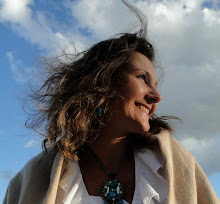
Last week I met an extremely talented weaver, but what impressed me the most was his passion for his art, his cultural and familial heritage.
Irvin Trujillo has been awarded the National Heritage Fellowship. I was very touched by his work, the Rugs he's weaving are just stunning, and he is so passionate that when I asked him question, he answered with many details, and talked to me about his heritage, showed me the wool he dye himself during spring time. (Beautiful shade of colors!)
This National Heritage Fellowship is well deserved! congratulation Irvine.
I've included a visit of his Studio and and shop in my 'Sacred Tour' and the client I took there this week where also deeply impress by his work and his very nice personality and character.
Below is an interview with Mary Eckstein, to get to know this great man.
NEA: First of all, congratulations on your award. Could you tell me how you felt when you heard the news?
MR. TRUJILLO: I knew that my name was in the running, but I didn't expect to get the scholarship. I was really excited.
NEA: Tell me about your earliest memories weaving. Why were you attracted to the tradition, and who were your teachers and mentors?
MR. TRUJILLO: My Dad was my first mentor. After my sister went to college he put his big loom in her bedroom and when he'd come home from work he'd weave. I was watching TV all the time, and heard all this racket in the back room, so I went back there to see what he was doing. I started to watch him and after a while he asked if I wanted to try. He put a little chair alongside him next to the loom so that I could move the spools. I wasn't tall enough to reach the loom. After probably about two nights weaving with him, he said, "I think you know the stitches, do you want to weave on your own?" And I said, "Sure." So he set me up a small loom that would weave 20 inch wide material.
When I first started I did a big striped piece. I did my second piece with my sister's name in it and gave it to her. I put my own name in the next piece. By planning the letters to go on the piece, I began to learn how to plan a design. Then I started to take commissions from friends for pieces with their names.
Lisa, my wife, learned how to weave after we got married and she has been instrumental as a peer. We would critique each other's pieces after we got them off the loom. Whenever my dad or my wife or I would finish a piece, we'd put it on the floor, and then everybody would say, "Oh, I really like this," or "I really like this." We helped each other to learn. And I studied privately with Jean Pierre LaResert, a French weaver out of Berkley who taught me the French technique. I also took a workshop from Archie Brennon, a world renowned weaver from England. From him I learned how to make the alphabet on five threads, as opposed to on a 20 inch piece. He really taught me to look at the detail of the relationship of each thread to the next.
NEA: You're a seventh generation weaver. I was wondering if you felt you were destined to become a weaver because of family tradition?
MR. TRUJILLO: After I wove as a child, I went on to other things. I really like drawing. When I was in college, I studied engineering, and went to work as an engineer. One day I was sitting at a desk with a window and I was looking out at another building that was taller than mine, and I realized I really couldn't do that for 30 years. I really don't like to be cooped up in a room that has no windows or air. I like the freedom Chimayo offers. When I told my dad that I wanted to start a business, he said, "Well, it's going to be hard, but if you have the money, you can start your business." I wanted to stay in New Mexico, and particularly in Chimayo, where my grandparents and my great grandparents live. It was very beautiful there -- I had lots of green trees, and in New Mexico green's pretty rare, because you need water. And one of the things that I worked at was water resources, and I understood the value of water in New Mexico. So I came back to work on preserving the water rights as well as weave, and to make a life in Chimayo
NEA: I know you combine ancient weaving traditions with more contemporary innovations. What goes into the inspiration for a new piece?
MR. TRUJILLO: I studied a lot of museum pieces and pretty much learned the old designs by observation. I didn't actually weave pieces with the old styles -- it was my father's philosophy that I should weave a new design for each piece, and in doing that develop a vocabulary in design. I learned through experience. And so I started incorporating various techniques. I tried different things, and, you know, some failed, some succeeded.
I have tried to have my work reflect the times in which I live. What I wanted to do was put themes that were important to my life. As an engineer, for example, when the first space shuttle crashed, it was very humbling at a technical level that it failed, so I did a piece reflecting that. And after my mother and father died, I wove a depression piece for a whole year. I wove a piece that documented the robbery of Chimayo's only bank. In the ‘80's there was a boom in Santa Fe called the Santa Fe Style which had coyotes howling up to the moon and stuff like that. I didn't really want to do that, but there were a lot of tours coming to our studio at that time, and so I kind of documented whether I was in it for the money or whether I was in it for the weaving.
One of the things that I really worked on was putting in Ikat, which is an Indonesian technique that usually used the weft of the piece into a broken weft background. In other words, breaking the weft into the Ikat technique and tapestry technique, which is combining two techniques into one piece. I've asked a lot of dealers -- there aren't that many pieces in the world that have that combination. It's just a different way in combining an old technique with the technique that I knew.
But it's hard to come up with an idea. After I finish a large piece, I usually I do some simple work and I get to soak in what I've learned from the previous piece. And when I start the next piece, I'm getting an idea of what I want to do. A lot of times I'll have to look in books, magazines, movies, any kind of media, visual media, that I might get an idea from. Then maybe I'll combine different ideas together in one piece. I've named pieces after pieces of music. I've generated random numbers from a computer, assigned a color to a number, and then woven the piece. I do a lot of sketches, and I took one and scanned it into the computer and started working in Photoshop, changing colors to see how the colors would work together. When I finally got something that I liked, then I had to dye the yarn to match the piece, and this has kind of tested my dying skills. I was able to do it and I was very happy with that idea. I've studied everything from Japanese anime to Walt Disney movies. Ideas just can come from anywhere.
NEA: How important is it to you to pass on the tradition of weaving through teaching and the pieces you create?
MR. TRUJILLO: My dad used to say that you can teach somebody, but what they do with what you teach is up to the person. I really took that to heart. One of the things that I wanted to do that he didn't was to come up with pieces that would in themselves teach or give ideas to future weavers. One of the things that we're doing is creating a database of all the pieces that go through the studio. We have pieces documented starting in about 1982, and we have these pieces on a disk. We have some slides before the computer graphics really got into shape.
The classes I've taught have been mostly in Ikat technique. I've taught a design course. I've also taught professional development. When people learn the art and technique of weaving, they have a hard time making a living as a weaver. So I'll teach the weaving basics and then talk about taking an order, taking a commission, what to look out for, things like that.
My wife has written a book based on conversations that I had with my relatives in Spanish about the weaving industry. We recorded those conversations and I translated them into English trying hard to preserve a feeling of the words and the context. We hired a ghost writer to develop a narrative of those stories and Lisa wrote sections on the weaving styles. The book is a real way of learning how the industry developed up to my father's generation. In other words, there were things that happened that influenced the changes, and in documenting that I was documenting the history of my family's weaving.
When I was growing up there weren't that many books on Hispanic weaving. There were many books on Navaho weaving, which I looked at. But I always wondered why there weren't any Spanish books. I had a lot of shame about my tradition because there wasn't very much to look at. It wasn't until 1976 that the museum published a book [on Hispanic weaving] and I got to see old pieces, which sparked my mind to doing this.
In addition to teaching here in the studio, I have apprentices. I've had people who have had a second grade education, people with a sixth grade education, and I've taught them how to weave and the basics of designing.
NEA: What advice do you have for young weavers?
MR. TRUJILLO: Learn from each piece. Try something different in each piece. Research other traditions and try to incorporate them.
NEA: What has kept you weaving throughout all these years?
MR. TRUJILLO: I don't know. That's a hard one. Part of it is that I have to work -- I have kids, and I need to make a living. But more importantly, it's the enjoyment of being able to work at what I like. There have been hard times when we didn't have money to pay bills, couldn't even take my kids to McDonalds. I've experienced what it's like to have very little money, and I've experienced having more money. What keeps me going is perseverance. I just really want to accomplish something here, in my work, and try to make it a valuable tradition.
Weaving is a wonderful art. I consider it an art form, which it may not be considered in art schools. I think it's a means of expressing ideas in the same a way that painting, sculpture, or photography can. It's important for me to keep learning and expressing what I've learned.